
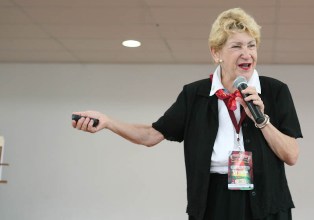
 By Elaine Gallagher
Brain studies are proving what good teachers have known for years. When students SEE a photo or picture, and HEAR the word at the same time, they remember the word easier, making it part of their active vocabulary.
Memory can be divided into three temporal stages, according to research by Dr. Steven Peterson, professor in the Department of Neurology at the Washington University School of Medicine.
1. The ENCODING stage. Information is presented, (verbal and /or visual).
2. Information is STORED, and frequently reinforced.
3. RETRIEVAL stage, when stored information is remembered.

Foto: © Perysty/depositphotos.com
You are more likely to remember an object if you are shown a picture of it, rather than just hearing the word that names the object. For example, when you see a picture of an object, such as a lizard, you are ENCODING visual and auditory information, hearing the name «lizard».
If you’re asked to remember the object later, the visual and the verbal codes combine to give you a better memory than just one single code or a simple word.
Now you know the neurological reason why movies, slides, photos, drawings, and flashcards help students to remember more easily, and why UNO vocabulary lessons encourage students to find Internet photos of vocabulary words.
Visual support is imperative to good learning.
________________________________

“Creo que en soledad, sin tener que compartir mis ideas, trabajo mejor, cierro la puerta y doy la clase cómo a mí me gusta”, dijo el maestro Fernando convencido de sus palabras. “No hay tiempo para equipos, todo es arrollador acá, en otra escuela puede que sea distinto, en esta apenas te alcanza para hacer lo que tenés que hacer”, sentenció su verdad Miss Mariana. “Los equipos de trabajo en los colegios son difíciles, por no decir imposibles”, espetó Marcos profesor de física en el última reunión de capacitación de SE. Silvia adhirió a su postura con un remate, “Cada maestro tiene su metodología y es muy difícil cambiarlo”.
Todos tienen razón. No hay verdad más profunda que la dificultad que tenemos para ponernos de acuerdo. Esta dificultad, a veces insalvable, tiene un nombre: Libertad.
Ella hace que ningún sistema sea ajustado a la medida exacta de las personas que lo habitan. Primero porque somos libres de no querer hacer las cosas y aunque sea lo mejor o lo más conveniente para cada uno de nosotros, muchas veces nos empeñamos en destruir el colectivo. Segundo, porque no siempre nuestras acciones son racionalmente ordenadas a un fin. El hombre no es un ser racional con emociones, es un ser emocional con razón.
La libertad nos eleva por encima de cualquier ser vivo, pero su alta dignidad a veces nos hace tomar caminos erróneos. A la elección de cómo organizar nuestras escuelas, nuestras clases se le puede imponer esquemas y protocolos, pero dentro de esos marcos se extiende una vida compleja, contradictoria, sujeta a pasiones encontradas… y por eso es limitada la posibilidad de formatear los grupos previamente.
Una cosa es el esquema y otra la vida donde ese esquema habita. Una cosa es la secuencia de aula y otra lo que ocurre en el aula.
Sistema UNO se presenta como una propuesta didáctica, pedagógico política de cambio escolar. Es un itinerario diseñado para que la escuela vire su práctica y trueque su concepción de la enseñanza.
Esta propuesta necesita de un colectivo que adhiera a los postulados últimos, a la idea troncal. Es una propuesta instrumental, pero básicamente es una mirada acerca de los fines de la educación.
Creemos que la escuela debe ser un espacio donde los niños construyen sus aprendizajes, no donde los docentes imponen sus enseñanzas. Imponer una enseñanza, no necesariamente trae aprendizajes profundos. Y nosotros hablamos de lograr aprendizajes duraderos, competencias y valores para el siglo XXI.
Pero si los docentes de un establecimiento siguen pensando que esto lo hacen solos, sin una mirada sistémica, sin una red con sus pares, con sus directivos, con los padres, con otras escuelas, el tan mentado cambio de la educación no surgirá nunca.
Sin ánimo de alcanzar una receta cerrada, UNO quiere buscar respuestas compartidas, líneas de buceo, marcos referenciales e hipótesis de trabajo. Uno está abierto con los maestros que estén dispuestos a compartir nuevas prácticas.
Apelamos a la libertad de cada quién para sumarse a este grupo humano de profesionales por el cambio, por una educación mejor.
Sabemos que a veces las circunstancias juegan en contra (siempre las hay). Falta de conocimiento mutuo, inercia por repetir las recetas conocidas, baja expectativa de éxito, ausencia de fuerzas que nos cohesionen y otras.
Las acciones humanas se determinan por la voluntad de querer concretar logros, más allá de las dificultades. Éstas no marcan la imposibilidad de la realización, sino la voluntad de no querer sortearlas.
El cambio escolar está en la puerta de nuestras posibilidades. Pero hay que abrirlas juntos, en red, en grupo. Solos será un intento más que morirá antes de alcanzar su meta. Los enemigos de la calidad educativa, son principalmente aquellos que buscan salvarse solos.
___________________________________

A instancias de la UNESCO, este 21 de febrero se celebra el Día Internacional de la Lengua Materna, que este año está dedicado a examinar la relación entre los idiomas locales y la ciencia. Varios especialistas debatirán el papel que éstos desempeñan para promover el conocimiento tradicional indígena y utilizarlo en favor de una ciudadanía mundial genuina.
[vsw id=»jDNgeU2mCoI» source=»youtube» width=»425″ height=»344″ autoplay=»no»]
La UNESCO aboga por educar a los niños en sus lenguas maternas desde la más tierna infancia, pues ello contribuye a crear bases sólidas de aprendizaje: si los niños utilizan su lengua materna en casa o en la enseñanza preprimaria están bien predispuestos para alfabetizarse en su lengua materna sin dificultades y, a continuación, aprender un segundo idioma (quizá el idioma nacional) en una etapa posterior de su escolarización.
La UNESCO entiende por educación bilingüe o multilingüe “el uso de dos o más idiomas como vectores de la enseñanza”. En 1999, la Organización adoptó la noción de “educación multilingüe” para referirse al uso de al menos tres lenguas en el ámbito escolar: la lengua materna, una lengua regional o nacional y una lengua internacional.
__________________________________
 Imagen: Google-UNESCO. Atlas UNESCO de las lenguas del mundo en peligro En México existen 143 lenguas clasificadas en diversos grados de peligro, que van desde vulnerable hasta crítico. Descubre cuáles son en el Atlas interactivo UNESCO de las lenguas del mundo en peligro. |
¿

Reemplazar las ganas por el sentido. Esto –y algo más– es lo que Pablo Doberti concibe como tesón, competencia que sitúa por encima de otras cuando de proveer de herramientas a los alumnos se trata.
En su columna de esta semana en pijama surf.com, el autor sostiene que el tesón no se enseña, se educa; y, por esta ocasión, se permite añorar de las instituciones educativas de antes, el desarrollo de esta virtud, cuyo fomento parece hoy estar ausente en las aulas.
El artículo puede leerse en: http://pijamasurf.com/2014/02/el-inversor-insistir-en-la-escuela/

- En trabajo conjunto con UNICACH y UNACH, sembrarán frutas, hortalizas, ornamentales, aromáticas y plantas medicinales.
- Necesario contribuir en la problemática de una alimentación sana.
UVM. 18/02/2014.- Contribuir en el mejoramiento de la salud de la población, la conservación de las especies vegetales y el fomento en el consumo de los vegetales, son los principales objetivos que persigue la creación de Huertos Ecológicos “Muil Itaj” (significa “Hoja Comestible” en Tzotzil), informó el Profesor Neín Farrera, Líder de Investigación en la Universidad del Valle de México Campus Tuxtla.
La idea de crear la red de huertos ecológicos “Muil Itaj”, surge en tres frentes distintos: la escuela de nutrición de la UNICACH (Universidad de Ciencias y Artes de Chiapas) a cargo de la Dra. Adriana Caballero Roque; de la Dra. Daysi Escobar Castillejos, líder de la Facultad de Ingeniería de la UNACH (Universidad Autónoma de Chiapas); y del Profesor Neín Farrera, quien encabeza el área de Investigación de la Universidad del Valle de México Campus Tuxtla en el proyecto del bioparque Yaxal Lum.
Estas tres casas de estudio en el sureste mexicano diseñaron los huertos. Los líderes del proyecto se reúnen periódicamente para dirigir los trabajos y para aportar ideas y conocimientos de acuerdo a su especialidad. Lo que une todo es el concepto de sustentabilidad y el propósito de promover la alimentación sana, tan necesaria en nuestros días.
 En los huertos ecológicos se considera sembrar frutas, hortalizas (betabel, acelgas, etc.), ornamentales, aromáticas y plantas medicinales que se adapten al clima de cada lugar. En el caso de Tuxtla Gutiérrez, los cultivos deben poder sobrevivir a las altas temperaturas que oscilan entre los 30 y 40 grados centígrados. Las plantas utilizan abonos orgánicos de composta, lombricomposta y biodigestores, en terrenos de siembra de 600 metros cuadrados aproximadamente.
“La idea de los huertos ecológicos es difundir y enseñar diferentes formas de cultivo, tanto rurales como urbanas con el fin de mejorar la alimentación (que sea sana y orgánica) y contribuir a la economía familiar al disminuir el gasto. Estamos invitando a escuelas de nivel básico y a otras instituciones de educación superior en el estado. Son las universidades las que llevan a los niños y a las familias la información para que se generalice en todo Chiapas e incluso en otros estados del país”, señaló el Profesor Neín Farrera.
El líder de Investigación de la UVM Campus Tuxtla agregó que hay diferentes tipos de huertos ecológicos que pueden ser de tierra, en macetas, verticales, hidroponía, según las necesidades y espacios. “Podríamos definir como un huerto un lugar exclusivo de productos orgánicos para la obtención y fomento del consumo de vegetales para la alimentación sustentable que ayuden en la mejora de la salud”, manifestó.
Para que los huertos ecológicos que se están construyendo funcionen, agrega el profesor Farrera, deben utilizarse técnicas de agricultura orgánica para el cultivo de especies vegetales comestibles; dar cuidados de mantenimiento a cada área de siembra del huerto; realizar procesamiento de productos alimentarios con vegetales del huerto; impartir cursos y talleres sobre alimentación sustentable para la población en general, e impartir cursos de nutrición saludable.
Los estudiantes de la UVM Campus Tuxtla que participan en el proyecto son de las áreas de Arquitectura Diseño Gráfico e Ingeniería Civil.
AZC/SMH
___________________________________

Imagen: © eltoro697depositphotos.com
Metáforas y analogías son recursos de lenguaje que empleamos para ilustrar algunos términos o conceptos que resultan complejos de explicar debido a que son abstractos, generales o profundos. Empleamos una metáfora o analogía siempre que intentamos comprender un elemento en términos de otro: cuando decimos “ese hombre es un león” empleamos la imagen de un león para llamar la atención de aspectos específicos que enmarcan nuestra comprensión sobre un hombre en concreto, de un modo distintivo aunque parcial. El amor es un concepto común, pero también sumamente amplio, abstracto y profundo, y por lo tanto difícil de definir o delimitar con palabras, es precisamente debido a ello que tendemos a malinterpretarlo y nos confundimos con respecto a lo que es y no es.
Comúnmente asociamos el amor con los sentimientos, debido a que es capaz despertar una gran diversidad de ellos; sin embargo, me atrevo a decir que amor no es en sí mismo un sentimiento, más definidamente es una capacidad, una decisión y una actividad. Sin pretender entrar en profundidades, de acuerdo con el Dr. Scott Peck el amor consiste en la voluntad de “abrirnos o extendernos” con el propósito lograr nuestro propio crecimiento y el de los demás, independientemente de los sentimientos que esto involucre. Es un proceso activo que implica cuidado, responsabilidad, respeto y conocimiento, como elementos básicos. Desafortunadamente, con demasiada frecuencia perdemos de vista estos elementos o sin darnos cuenta, los aplicamos de manera errónea; consiguiendo resultados opuestos a los deseados.
Un ejemplo concreto de una concepción errónea que algunos padres tenemos con respecto al amor, es asumir que para que nuestros hijos sean felices y seguros de sí mismos, debemos protegerles al máximo, evitándoles todos los sufrimientos y esfuerzos posibles. Los sobreprotegemos, y la lección de la mariposa me parece un buen recurso para ilustrar de una manera análoga sus posibles consecuencias:
Un día un hombre encontró un capullo de mariposa y observó que en él había un pequeño orificio. Se sentó a observar mientras la mariposa luchaba durante varias horas para forzar su cuerpo tratando de pasar a través del agujero, pero parecía que no hacía ningún progreso. Apiadado, el hombre decidió ayudar a la mariposa, tomó las tijeras y cortó el resto del capullo. La mariposa salió fácilmente, pero tenía el cuerpo hinchado y las alas pequeñas y arrugadas. El hombre esperaba que en cualquier momento las alas se extenderían para poder soportar el cuerpo que, a su vez, debería deshincharse. Pero nada de esto ocurrió. Por el contrario, la mariposa pasó el resto de su vida con el cuerpo hinchado y unas alas encogidas… ¡nunca pudo volar!
Lo que aquel hombre, con su mejor intención no llegó a comprender, es que el capullo restrictivo y la lucha para que la mariposa pudiera salir por el diminuto agujero, era la manera diseñada por la Naturaleza para enviar fluido del cuerpo de la mariposa hacia sus alas, de modo que estuviera lista para volar tan pronto obtuviera la libertad del capullo. A veces el esfuerzo es exactamente lo que necesitamos en nuestras vidas, de esto no me cabe la menor duda, y aunque en el fondo sí lo sabemos, mantenemos oculto en nuestro inconsciente el mensaje debido a que resulta diametralmente opuesto a la información que recibimos de manera continua en nuestra cultura tecnológica que enaltece y fomenta la ley del menor esfuerzo.
Ideas como la anterior, que al educar aplicamos erróneamente -en este caso en forma de sobreprotección de los hijos-, lejos de hacerlos felices y plenos, limita sus posibilidades y debilita el carácter al no permitirles la oportunidad de obtener sus propios logros con base al esfuerzo, conocer sus fortalezas, plantearse metas; los vuelve dependientes e inseguros de sí mismos. En contraste, una concepción más asertiva del amor hacia nuestros hijos consiste apoyar su autonomía y asumir entonces que no debemos hacer por ellos nada que ellos puedan hacer por sí mismos. En la vida, el dolor es inevitable y el esfuerzo fortalece, ayuda a crecer y genera satisfacción y autoestima. En ello consiste buena parte de la formación del carácter.
_______________________________
 La autora es licenciada en docencia de Inglés y máster en administración de instituciones educativas, se ha desempeñado en el ámbito educativo por más de 25 años, en áreas de docencia, desarrollo académico y curricular, y coordinación IB. Ha trabajado como consultora independiente y organizado conferencias de formación para padres con la participación de diversas instituciones educativas, y como columnista en un periódico local, tiene un especial interés por generar aprendizaje organizacional en las instituciones educativas y actualmente es Consultora académica de UNO Internacional para la región de Sinaloa
 By Elaine Gallagher
Grade Level: 5th Grade – 9th Grade
Overview -This lesson is designed to complement an audio/visual (a live or film) performance of Peter and the Wolf, and can be used both prior to and after the performance.
The activities in the lesson support students’ literacy growth and encourage the development of critical thinking skills. Students will match instruments to the characters they represent in the symphony, re-write the story of Peter and the Wolf from the wolf’s perspective, engage in a debate on whether or not the wolf should be released from the zoo, and make homemade instruments.
Subjects: Language Arts/ The Arts
Materials
- Audio recording of Sergei Prokofiev’s Peter and the Wolf
- Film of Peter and the Wolf
- Jon Scieszka’s book The True Story of the Three Little Pigs
- Poster paper
- Book paper
- Drawing utensils
- Materials for instruments
Objectives – Students will be able to do the following:
- Describe how musical instruments can communicate particular ideas or moods in music.
- Write a story that uses a character’s traits and motivations to determine the causes for that character’s actions.
- Use details, examples, or anecdotes to explain or clarify their position on an issue.
- Compose and improvise simple rhythmic and melodic patterns on classroom instruments.
Steps
Pre-Concert Activity
In this activity students will listen to Sergei Prokofiev’s Symphony Peter and the Wolf and match the instruments to the characters they represent.
1. Explain to students that Sergei Prokofiev composed the Peter and the Wolf symphony to introduce children to the different instruments of the orchestra.
2. Read the story of Peter and the Wolf to your class. An online version of the story can be found at http://library.thinkquest.org/17321/data/estext.html.
3. Stop at different points in the story and ask students to guess which instrument Prokofiev might have used to represent the character.
4. Tell students that they are going to listen to instruments and try to match them to the corresponding story character.
5. Write the following lists of instruments and characters on the board or use your i-pad & projector.
- Strings Peter
- Bassoon Peter’s Grandfather
- Flute Bird
- Horns Wolf
- Clarinet Cat
- Oboe Duck
- Timpani Hunters’ Guns
6. Go to the http://www.dsokids.com/2001/instrumentchart.htm Web site and click on the instruments listed above. Each link leads to a page that gives a brief description, history and sound clip of the corresponding instrument.
7. As you play the sound clip of each instrument, ask students to guess which character that particular instrument is representing and record their answers.
8. After everyone has finished, replay each instrument and ask students what character they thought it was and discuss the reasons for their choices. Example: The instrument made a loud bang that sounded like a gun.
Answers:
- Strings-Peter
- Tympani- Hunters’ Guns
- Flute – Bird
- Horns – Wolf
- Clarinet – Cat
- Oboe – Duck
- Bassoon – Peter’s Grandfather
Post-Concert Activities
Activity One
In this activity students will rewrite the story of Peter and the Wolf from the wolf’s perspective.
1. Read Jon Scieszka’s book The True Story of the Three Little Pigs to your class.
2. Discuss how this story differs from the classic tale of The Three Little Pigs when it is told from the wolf’s perspective.
3. Read the story of Peter and the Wolf to your class. An online version of the story can be found at http://library.thinkquest.org/17321/data/estext.html. You may also choose to copy the story from the site and pass it out to the students, or use yopur i-pad to project the story to all the students. If you can download it on their i-pades or computers, even better!
4. Ask students to rewrite the story of Peter and the Wolf from the wolf’s perspective.
5. Tell students not to change the plot of the story, but to retell the story from the wolf’s point-of-view.
6. Have students progress through the writing process (e.g., prewriting, drafting, revising, and editing successive versions).
Teacher Note: These Web sites offer information on the writing process.
7. Explain to students that because they are “publishing” this book, the text needs to be free from errors.
8. Conference with each student and address the following items:
- Sentence Structure
- Grammar
- Punctuation
- Capitalization
- Spelling
9. Ask students to illustrate their books.
10. Bind the pages together.
11. Have a class book party so that students can share their books with their classmates.
12. The following is a list of possible discussion questions to use after everyone has shared their story:
- How are the two versions different?
- What are the reasons for this?
- Can you relate this to events that happen at home, school, your community or the world?
Activity two
In this activity students will debate whether or not the wolf should be released from the zoo.
1. Tell students to imagine that the Peter and the Wolf story really happened and they live in the community where the wolf is being kept in the zoo. Tell them that some local residents think the wolf should be released from the zoo, and they are being asked to take a stand on the issue.
2. Ask students to decide if they think the wolf should be kept at, or released from, the zoo.
3. The students will create the following items to help convince people to either free the wolf or keep it in the zoo:
- A poster
- A slogan
- A statement that explains their point-of –view on the wolf situation
Teacher Note: Students’ written statements should:
- Provide an introductory paragraph.
- Establish and support a central idea with a topic sentence at or near the beginning of the first paragraph.
- Include supporting paragraphs with simple facts, details, and explanations.
- Conclude with a paragraph that summarizes the points.
4. Display the finished posters and slogans around the room.
Teacher Note: Create a panel to hear the students’ arguments and make a decision on the wolf controversy. This panel might include parents, school administrators or students from other classes.
5. Have the students take turns reading their arguments to the panel.
6. After hearing all of the arguments, ask the panel members to discuss the issue among themselves, and draft a brief statement to read to the class.
Activity Three
In this lesson students will make homemade instruments and use them to represent the characters in the book The Musicians of Bremen.
1. Read the story The Musicians of Bremen. An online version of the story can be found at http://www.interest.de/~krausst/grimm/musicians.of.bremen.html.
You may also choose to copy the story from the site and pass it out to the students, or use individual i-pads or computers, where the story has been downloaded, or the teacher projects the story from an i-pad.
2. Ask the class to think about how Prokofiev used the instruments in Peter and the Wolf to represent the characters in the story. Instruct students to think about what instruments could be used to represent the animals in The Musicians of Bremen.
3. These Web sites contain directions on how to make homemade instruments:
- http://menc.org/guides/wlc/tg02/Lesson6.html.
- http://www.iit.edu/~smile/ph9416.html
- http://www.mudcat.org/kids/
Visit the sites to choose which instruments you would like to make with your class and copy the directions.
4. Break the class into small groups and provide them with materials to make the instruments.
5. Form small groups again and ask the students to complete the following tasks:
- Decide which homemade instrument should represent each of the characters in the story.
- Compose a short melody with each instrument to represent each character.
- Practice telling the story, combining the text and the melody.
- Perform the piece for the class.
6. After all of the groups have finished their performances, ask each group to explain why it chose the instruments it did for the characters.
Interdisciplinary Extensions
Science
Learn about sound at The Sound Project Web site hosted by IBM, the Minnesota Orchestral Association and the Science Museum of Minnesota.
Music
Send students to this site to create their own music.
Assessment
Teacher Evaluation
Create individual portfolios of students’ work.
Observe students in the following areas:
- Growth in cognitive skills
- Interactions that occur during group work
- Growth in social skills
- Growth in attitudes toward learning
Conference with each student on these topics:
- His or her goals
- Strategies for learning
- Solutions to problems
Student Self Evaluation
- What did I learn from this project?
- What do I still want to learn about this topic?
- What part of my work on this project gives me a sense of achievement?
- What would I do differently next time?
- In what ways was I able to work with others on this project?
- What did I like most about this project?
Setting Standards
Grades 5, 6
Language Arts
1. Writing Strategies – Students write clear and coherent sentences and paragraphs that develop a central idea. Their writing shows they consider the audience and purpose. Students progress through the stages of the writing process (e.g., prewriting, drafting, revising, editing successive versions).
2. Literary Response and Analysis
3. Determine what characters are like by what they say or do and by how the author or illustrator portrays them.
4. Written and Oral English Language Conventions?Students write and speak with a command of standard English conventions appropriate to their age/experience/grade level.
Listening and Speaking
Organization and Delivery of Oral Communication ?
1.Organize ideas chronologically or around major points of information.
2. Provide a beginning, a middle, and an end, including concrete details that develop a central idea.
3. Use clear and specific vocabulary to communicate ideas and establish the tone.
4. Clarify and enhance oral presentations through the use of appropriate props (e.g., objects, pictures, charts).
Music
1. Play rhythmic and melodic ostinatos on classroom instruments.
2. Describe how specific musical elements communicate particular ideas or moods in music.
Compose, Arrange, and Improvise
1. Create short rhythmic and melodic phrases in question-and-answer form.
Visual Arts
1. CONNECTIONS, RELATIONSHIPS, APPLICATIONS?
Connecting and Applying What Is Learned in the Visual Arts to Other Art Forms and Subject Areas
2. CREATIVE EXPRESSION?Creating, Performing, and Participating in the Visual Arts
Students apply artistic processes and skills, using a variety of media to communicate meaning and intent in original works of art.
SETTING STANDARDS
Grades 7, 8, 9
Language Arts
Literary Response and Analysis
1. Use knowledge of the situation and setting and of a character’s traits and motivations to determine the causes for that character’s actions.
2. Writing Strategies
Students write clear, coherent sentences and paragraphs that develop a central idea. Their writing shows they consider the audience and purpose. Students progress through the stages of the writing process (e.g., prewriting, drafting, revising, editing successive versions).
3. Create multiple-paragraph compositions:
a. Provide an introductory paragraph.
b. Establish and support a central idea with a topic sentence at or near the beginning of the first paragraph.
c. Include supporting paragraphs with simple facts, details, and explanations.
d. Conclude with a paragraph that summarizes the points.
e. Use correct indention.
4. Written and Oral English Language Conventions
Students write and speak with a command of standard English conventions appropriate to this grade level.
Listening and Speaking
1. Listening and Speaking Strategies
Students listen critically and respond appropriately to oral communication. They speak in a manner that guides the listener to understand important ideas by using proper phrasing, pitch, and modulation.
2. Summarize major ideas and supporting evidence presented in spoken messages and formal presentations.
3. Organization and Delivery of Oral Communication
Present effective introductions and conclusions that guide and inform the listener’s understanding of important ideas and evidence.
4. Use traditional structures for conveying information (e.g., cause and effect, similarity and difference, and posing and answering a question).
5. Emphasize points in ways that help the listener or viewer to follow important ideas and concepts.
6. Use details, examples, anecdotes, or experiences to explain or clarify information.
7. Use volume, pitch, phrasing, pace, modulation, and gestures appropriately to enhance meaning.
Music
Compose, Arrange, and Improvise
Compose and improvise simple rhythmic and melodic patterns on classroom instruments.
Visual Arts
1. CONNECTIONS, RELATIONSHIPS, APPLICATIONS
Connecting and Applying What Is Learned in the Visual Arts to Other Art Forms and Subject Areas
2. CREATIVE EXPRESSION
Creating, Performing, and Participating in the Visual Arts Students apply artistic processes and skills, using a variety of media to communicate meaning and intent in original works of art.
+++++++++++++++++++++++++++++
Improvise, teachers, using ideas that will support your style of teaching and your students’ various ways of learning.
ENJOY!
_____________________________

Foto: ©jovannig-dibrova/depositphotos.com
by Annette Capel, Cambridge English Language Assessment consultant
Although people still talk about different types of English – American English, Australian English, Indian English – it is interesting to notice how close these are to each other nowadays. Any native speaker reading or listening to another ‘type’ of English will understand almost every word. Of course, there are differences, and this article gives a few examples of the variation that still exists between American and British English. However, largely because of global communication, cinema, television and especially the internet, different types of English have influenced each other a lot recently. This is typically coming in one direction – from the US to Britain – and it has changed our daily language significantly.
Teens and young adults in Britain use American vocabulary that has crossed the Atlantic all the time – things that young speakers like a lot are described as cool or awesome, and, as a way to refuse to do something impossible, we often hear the phrase No way! However, it is not just our youth who use expressions which were originally American – the polite phrases You’re welcome! or Have a nice day!, which are commonly used in Britain in places like hotels, both originated in the US, while British business people may use phrases like taking a rain check, meaning that they cannot accept an invitation at that time.
Nevertheless, some differences do remain. From 2007 to 2012, I was fortunate enough to work on a massive vocabulary research project for Cambridge English, which is called the English Vocabulary Profile. You can view the results for free online at www.englishprofile.org. Working with Carol Cassidy, based in New York, we developed two versions of an interactive database, containing the words and phrases that learners of English around the world typically know and use. Our evidence was based partly on a 50-million-word collection of learners’ writing from Cambridge English exams, but we also looked at the vocabulary taught in best-selling British and American English course books.
So, what did we find out? Well, for a start, there are some words that are still exclusively British or American, even though people from both countries understand them. British people have biscuits with their cup of tea or coffee, but Americans have cookies. We have cookies too in Britain, but they are a certain type of biscuit, such as chocolate chip cookies, where the original recipe is American. A British person goes on holiday, whereas an American takes a vacation; you visit a city centre in Britain but go downtown in the US; British people join a queue to wait for something, but Americans wait in line.
A few words have different meanings across the two varieties of English, which could cause some embarrassment: Americans who are wearing pants definitely have their legs covered, but if a British person is dressed only in pants, they are in their underwear! And if you need to fill up your car with fuel, you can ask for gas in the US, but you need to buy petrol in Britain, as ‘gas’ is not a liquid in British English.
Phrasal verbs (verbs with two or more words like take off or live up to) are another area of difference, and there are slightly fewer of them in the American English version of the English Vocabulary Profile. British and American speakers, for example, talk of a relationship breaking up, but Americans wouldn’t use this phrasal verb to mean ‘finish a school term’ as we do in Britain. And British people buy food to take away whereas Americans have a take-out.
Overall, though, our research shows that British and American English are actually very similar. The 10 most common words (the, of, to, and, a, in, that, is, for and I) are the same in both countries, and looking at the 5,000 most common words in the UK, the vast majority of these words are also in the USA’s top 5,000. Most of the differences are easy to explain – for example, it’s not surprising that ‘pounds’ is much more common in British English, while ‘dollars’ is used more in the USA.
How does all of this affect a learner of English who is thinking of taking a Cambridge English exam? As an examiner, I can reassure you that both British and American English are equally acceptable in the Writing and Speaking tests. We recognise (recognize in American English!) that classes are taking place around the world in many varieties of English, from American English to Zimbabwean English, but what is important above all is that an exam candidate can show us their ability to communicate effectively in English. It is a language that is used globally and our examinations reflect that diversity.
____________________________________________
Artículos relacionados: American English? British English? by Elaine Gallagher

Mauricio André Nájera Cárdenas del Colegio La Paz es el ganador de la edición 2013-2014 del Be a Speller Contest organizado por UNO Internacional entre las escuelas de su comunidad. El segundo puesto correspondió a Diego Hernández Sánchez del Instituto La Salle Boulevares y, en la tercera posición, se ubicó Edith Alejandra Peña Sánchez del Colegio Everest.

 El concurso se llevó a cabo en las instalaciones de Grupo Santillana en la Ciudad de México, donde se dieron cita los ganadores de cada una de las 21 regiones en las que se dividió la competencia en esta ocasión. Dan Gutiérrez y Mariela Boone, consultores académicos de UNOi que tuvieron a su cargo la organización en todas sus etapas, explicaron las reglas para luego dar paso a dos rondas de calentamiento antes del inicio formal.
 Sissi Cancino dio la bienvenida a los participantes, destacando su calidad de campeones y agradeció a padres y maestros el apoyo brindado a los chicos para llegar a esta final. Por su parte, la directora académica de UNOI México, Patricia Zorrilla, reiteró la felicitación por el esfuerzo realizado y les instó alcanzar su mejor desempeño.
La mesa de los jueces estuvo conformada por Mariela Boone y, como invitadas especiales, Elaine Gallagher de UNOi y Elaine Beakman de Cambridge English Language Assessment.

Después de dos horas y media y más de veinte rondas en que los concursantes resolvieron con solvencia y aplomo la mayoría de las palabras de la lista, aún permanecían en la competencia 13 de los 21 que iniciaron. Según lo previsto en el programa se hizo una pausa para que los participantes tomaran un refrigerio, tras lo cual se reanudaron las rondas, ahora con palabras distintas a las de la lista original, misma que ya habían agotado.
En esta nueva etapa, varios fallaron durante las primeras rondas; sin embargo por observación de los padres y maestros presentes respecto a que se habían repetido palabras o incluido algunas de la lista nacional, los jueces deliberaron reiniciar las rondas de nueva cuenta con los 13 que no habían fallado hasta antes de la pausa.

Las eliminaciones se sucedieron hasta determinar los tres primeros lugares. Mauricio recibó como premio un iPad mini por parte de UNOi y un iPod que obsequió Cambridge English Language Assessment, quien además otorgo una cámara digital a Diego por su segundo lugar y unos audífonos a Edith Alejandra por haber obtenido el tercero.

Además de los que se dieron a los ganadores, todos los participantes obtuvieron un diploma y quedaron invitados por UNOi, para asistir el día de mañana al Papalote Museo del Niño y convivir en un ambiente de diversión entre ellos.
¡Felicidades a Todos!
____________________________________
Más fotos se pueden ver en la página de Facebook de UNOi en: https://www.facebook.com/media/set/?set=a.651160811617949.1073741907.141694832564552&type=3

Llegó el día. 21 campeones regionales se medirán este lunes en final de la edición 2013-2014 del Be a Speller Contest de UNO Internacional.
La competencia promete estar muy reñida, ya que todos los participantes han demostrado un excelente desempeño al resultar vencedores, primero en la etapa interna en sus respectivos colegios, y después en la fase regional de la que salieron airosos para llegar a esta última definición, en la que enfrentarán a sus pares, igualmente experimentados y preparados para dar lo mejor de sí.
El concurso podrá seguirse en vivo a partir de las 10 horas en la página de Uno Internacional en: www.unoi.com |
Hay que destacar que, independientemente de quien resulte ganador, la calidad hasta ahora exhibida por cada uno de estos chicos es digna de elogio y el hecho de haber llegado hasta aquí habla por sí solo de su capacidad.
Aquí presentamos a los contendientes.
