

Foto: © eltoro69/depositphotos.com
Por Dionisia Pappatheodorou
“Se dice que las nuevas generaciones serán difíciles de gobernar. Así lo espero”
Alain
Sin lugar a dudas, las relaciones humanas son sumamente complejas, y esto se debe principalmente a que somos individuos, y cada uno de nosotros percibimos, pensamos, sentimos y actuamos de maneras muy diversas. No existen en el mundo dos personas iguales, pero si resulta posible, y además deseable, encontrar nuestras similitudes con los demás. Las similitudes nos acercan y nos unen, son los aspectos que tenemos en común con otras personas y a través de ellos podemos conectarnos.
Cuando conversamos con alguien que anteriormente no conocíamos, normalmente lo primero que buscamos es encontrar algún punto de coincidencia, por pequeño que sea, de manera que a partir de éste podamos desarrollar una interacción que nos resulte mutuamente interesante y la relación florezca. Sin embargo, encontrar nuestras similitudes no garantiza una buena relación, es sólo constituye un primer paso. El segundo, sería respetar nuestras diferencias, y es aquí donde en términos generales, la dificultad comienza.
El respeto por nuestras diferencias es algo que requiere de educación y como cualquier aspecto educativo, involucra necesariamente conciencia y disciplina, dos aspectos sumamente importantes… y por educación no me refiero únicamente a la instrucción sino a un concepto mucho más amplio. Me refiero al conjunto de características que nos convierten en humanos, incluyendo a la cultura en todas sus dimensiones. En ella se encuentran involucrados aspectos intelectuales, afectivos y espirituales: el ser humano considerado en su totalidad. Es por ello, que en la actualidad hacemos tanto énfasis en la educación integral. Sin embargo, para ser íntegros, requerimos ser congruentes y consistentes; alinear lo que pensamos, decimos y hacemos. Cuando decimos una cosa y hacemos algo distinto, estamos siendo incongruentes, y cuando esto sucede, o cuando actuamos de forma inconsistente, muy seguramente estaremos generando conflictos. Esta es la regla.
En la actualidad, la apertura de fronteras entre países y culturas, exigen el respeto por la diversidad y por el entorno. No es posible convivir y relacionarnos armónicamente sin esta cualidad. Pero el respeto presupone la capacidad de reconocer la individualidad –la propia, y la de los demás- aceptarla, y dar espacio, libertad… algo que únicamente puede lograrse a través de la comprensión. ¿Cómo podríamos respetar aquello que no comprendemos? Resultaría un tanto difícil ¿no les parece? Esto aplica especialmente bien en las relaciones humanas, y aquí me parece prudente incluir a las relaciones que se dan entre generaciones.
La brecha generacional y los conflictos que a partir de ésta se generan, a mi juicio, no son otra cosa que falta conocimiento y de comprensión, lo cual favorece que haya poca tolerancia y respeto entre unos y otros.
Cuando hablamos de generaciones, estamos refiriéndonos a un grupo de individuos que nacen y viven en una época determinada, lo cual marca de manera decisiva su forma de vida y su personalidad. Como grupo, llegan a compartir ciertas características y puntos de visita, similitudes que conforman lo que se denomina “el espíritu generacional”. Debido -obviamente- a los acontecimientos y experiencias vividas, este espíritu puede diferenciarse entre una época y otra, y es posible también describirlo con cierta precisión. Si analizamos sus peculiaridades, resulta mas sencillo comprender a las personas que pertenecen a una generación u otra, e inclusive llegamos a vislumbrar algunos efectos de los paradigmas de una generación en la siguiente, lo cual resulta interesante.
En la actualidad convivimos en el mundo al menos cuatro generaciones con características bien definidas: la generación “S” a la que pertenecen la mayoría de los abuelitos y las personas de mayor edad; seguidos por los “baby boomers” o generación “sándwich”, que incluye a la mayoría de los padres en edad madura. La tercera, es la “generación “X” integrada por los adultos y padres más jóvenes; y finalmente están los más pequeños, nacidos con el milenio y a quienes se denomina generación “N” o “Net”. Cada generación posee rasgos únicos, y si bien existen ligeras similitudes debido a la crianza, también –y con gran frecuencia- existe un rotundo rechazo de los jóvenes a ser similares a sus progenitores. Las nuevas generaciones desean desesperadamente ser independientes, es parte de una necesidad existencial, lo cual explica en cierto sentido, las diferencias y contrastes entre una generación y la siguiente.
__________________________

Conformada por una serie de cursos que permitirán a los profesores adentrarse en la propuesta del sistema desde cualquier lugar, a partir del inicio del próximo ciclo escolar, UNO Internacional pondrá a disposición de de la Red de escuelas UNO la Plataforma de formación.
Para conocer más de esta innovación, UnoNews conversó con Carlos Ble, gerente digital y Karime Pulido Ramzhauer, coordinadora de formación digital. La Plataforma de formación, explicó Karime, surge en respuesta a peticiones de los colegios sobre algún tipo de herramienta que permitiera la profesionalización del docente en cuanto a todo lo que es la pedagogía y la metodología del sistema de UNOi. El objetivo que busca la plataforma es ser un aliado, tanto para los coaches como para los colegios en la formación de sus profesores.
Por su parte Carlos señaló que al crecer el número de colegios aumentó también la necesidad de acompañamiento por parte de los coaches quienes, en su experiencia, además del modelo de UNOi, tienen diferentes especializaciones específicas. La plataforma aprovecha esta experiencia para ponerla a disposición de todos los colegios, que de otra forma sería prácticamente imposible visitar.
 Sobre la estructura de la plataforma, Karime precisó que comprende tres módulos: Filosofía, Pedagogía y Didáctica de UNOi. Dentro de cada módulo hay un tronco común a todos los docentes y después se ramifica dependiendo de si perteneces al programa SE, a al programa BE y a qué sección, kínder primaria o secundaria. En ella, los maestros van a encontrar la información que requieren o las respuestas a las dudas que surgen cuando empiezas a trabajar por primera vez con el sistema. Por ejemplo, qué es la Interacción Constructiva, hacia dónde se deben caminar el colegio para lograr la transformación en las clases, cuáles son las herramientas con las que cuenta, cómo usar los recursos digitales en el aula, cuál el manejo de los libros, qué libros componen el programa de BE, cuáles son las certificaciones, cuáles son los procesos de evaluación y, la vinculación con los proyectos integradores y con los valores, entre muchos otros.
Carlos mencionó que los cursos tienen una estructura secuencial –algunos independientes y otros seriados– que, de acuerdo a como el profesor vaya avanzando, podrá ir desbloqueando nuevos temas de niveles más avanzados. De acuerdo a la temática específica pueden o no tener alguna evaluación para acceder al siguiente nivel.
 Otra característica que destacó Carlos es que la plataforma va a integrar en tutoriales que expliquen paso a paso todo el conocimiento de la orientación que brinda Escuela UNO; por ejemplo cómo configurar la plataforma, descargar contenidos, sincronizar, etc. Incluirá un buscador para que el usuario que tenga dudas, en vez de llamar al 01 800, pueda consultar una lista de temas que le pueden ayudar a resolverlas.
Según Karime, la plataforma beneficia el trabajo de los coaches, ya que en sus visitas periódicas, habiendo los maestros explorado distintos temas, tendrán más claro el proceso y podrán ser más específicos en los detalles en los que requieren apoyo.
En una etapa posterior a la de los contenidos de formación, concluyó Carlos, se pretende que los profesores participen en comunidad, agreguen, comenten y dinamicen esa red al subir contenidos propios, ideas, sugerencias o comunicación con colegios en diferentes estados o países para promover el intercambio de conocimiento.
Los maestros conocerán la propuesta a partir de las sesiones de capacitación inicial a celebrarse a principios de agosto.
______________________________

Iván Alberto Obregón Fuentes, alumno del Instituto Bicultural Juan de Ugarte, obtuvo el mejor puntaje en la Olimpiada del Conocimiento en el estado de Baja California Sur, en el que participaron más de 14 mil niños de 391 escuelas primarias.
Iván es originario de Aguascalientes, tiene 11 años y cursa el sexto de primaria. Considera que el examen de la última etapa fue muy difícil pero salió adelante gracias a su esfuerzo y preparación.
Se sintió feliz al conocer los resultados, sus padres le manifestaron su orgullo y recibió muchas felicitaciones de maestros y compañeros.
 Su materia favorita es la de matemáticas y piensa que la herramienta del iPad ha contribuido a su desempeño pues le facilita la búsqueda de información y le ayuda a prender mejor. Cuando no está dedicado al estudio Iván practica deportes. Además de disfrutar mucho jugando al futbol, en agosto próximo presentará su examen para obtener la cinta negra en Tae Kwon Do. Sobre la forma en ve su futuro Iván comenta que le gustaría ser una persona exitosa haciendo lo que le gusta.
Hacia finales de este mes, Iván encabezará la delegación de su estado en la visita a la capital, donde serán recibidos por el Presidente de la república. Si tuviera la oportunidad de hablar con él, Iván nos dice: “Me gustaría preguntarle sobre su forma de gobernar y cómo ésta beneficia a los mexicanos”.
UnoNews preguntó a la Sra. Norma Fuentes, mamá de Iván, cómo percibía el sistema de UNO Internacional y cómo consideraba que había influido en su hijo. “El sistema –nos dijo– presenta al alumno la oportunidad de ser autodidacta y regulado, con una herramienta que va a la vanguardia en tecnología, presentando información de calidad y de total beneficio para el desarrollo de los alumnos. En mis hijos esta herramienta ha contribuido a tener a la mano información de punta en cualquier área del conocimiento, encontrar artículos de interés, tener reforzamiento con el uso del material que se presenta en la atmosfera digital.
Respecto a cómo imaginaba el futuro de Iván, su mamá externó: “Sueño con un joven con grandes oportunidades, pleno, lleno de amor y feliz”.
_________________________
Fundado en 1993, el Instituto Bicutural Juan de Ugarte imparte los niveles de Preesoclar y Primaria y cuenta con un elevado prestigio en su comunidad ganado en más de 20 años de esfuerzo constante por una formación de calidad. UnoNews pudo conversar con su directora general, la Maestra Guadalupe Rojo Avilés. Aquí la entrevista:
¿Qué hace diferente a su institución educativa?
Nuestra misión, visión y valores. Nuestro proyecto educativo institucional, que está orientado para que el instituto contribuya activamente con las familias en la formación integral de nuestros alumnos y alumnas, con altos estándares de desempeño escolar y con la participación de toda nuestra comunidad.
¿Qué ha cambiado en el Instituto a tres años del Sistema de UNOi?
Sistema Uno Internacional nos evaluó, nos capacitó y puso a nuestro alcance la atmósfera digital; todo ello en conjunto con la participación del todo el equipo de trabajo permitió la transformación de nuestra institución, respetando su esencia y el proyecto educativo institucional.
¿Por qué? Porque por primera vez conocimos de un sistema educativo estructurado, con bases sólidas y científicas para apoyar a la escuela particular.
Antes de incorporarnos a UNOi, como Directora General me mantuve en una constante búsqueda de aspectos y componentes que permitieran al Instituto complementar el programa de SEP, que incorporara avances pedagógicos de vanguardia para brindar un servicio educativo de alta calidad y con alto valor agregado para la comunidad escolar. Esa búsqueda fue ardua y costosa; si bien considero que en buena medida se alcanzó el objetivo planteado, no siempre se obtuvieron los resultados esperados.
Con Sistema Uno Internacional fue posible complementar de forma eficiente y eficaz nuestro proyecto educativo, el resultado de ello lo vemos continuamente en nuestros alumnos y alumnas.
Con 47 años de experiencia docente -28 en la Secretaría de Educación Pública y 19 en el sector de la educación privada- y después de hacer un recuento de mis vivencias profesionales, estoy convencida que UNOi es un excelente apoyo que incide directamente en el desarrollo integral de nuestra institución.
En estos tres años con UNOi hemos obtenido logros visibles y por demás importantes, pero considero que aún hay muchos beneficios para nuestra comunidad que estaremos observando y corroborando fehacientemente en los próximos ciclos escolares.
¿Cómo han cambiado los alumnos?
Con pocas excepciones observamos avances muy significativos en su autonomía, habilidades y han adquirido más y mejores competencias. Están muy contentos de utilizar herramientas como el iPad, la atmosfera digital y sobre todo de “aprender jugando con las aplicaciones”, como ellos y ellas textualmente lo han expresado.
Lo hemos observado muy activos y activas al emprender la búsqueda de sus conocimientos, el ambiente áulico digital les resulta muy atractivo, han expresado que es más fácil y divertido aprender con las herramientas de Sistema Uno.
¿Qué piensan los maestros del cambio?
Vencida la inicial y esperada resistencia al cambio, han expresado que transformó su desempeño docente, observan un ambiente del aula es más lúdico y éste les brinda más posibilidades de diversificar.
Los apoyos y herramientas tecnológicas que están a su alcance les permiten sentirse más acompañados y estar en constante actualización y capacitación, por lo que sus competencias docentes se fomentan continuamente, sobre todo la capacidad reflexiva y crítica sobre lo que saben hacer.
Yo en lo personal, percibo su alegría y satisfacción, porque me han expresado que la transformación recién se inicia y los retos son constantes y enormes, coinciden en que hay muchos beneficios que se reflejarán en los siguientes ciclos escolares y manifiestan su confianza en SUI.
¿Qué opinan los padres de familia?
Expresan que los resultados han sido evidentes, constataron en sus hijos e hijas el desarrollo de más y mejores de las habilidades, sobre todo matemáticas y lectoras, así como en el aspecto emocional. También en lo relativo al aprendizaje y la utilización del idioma inglés en la vida diaria, ya que mayoritariamente la comunidad es bilingüe e incluso algunos integrantes hablan tres o más idiomas y viajan frecuentemente; sugieren que UNOi considere además del inglés, la enseñanza de francés.
En el aspecto administrativo ¿qué mejoras observa?
Los indicadores señalan que se logró mayor eficiencia en la administración del tiempo en la escuela, particularmente con la eliminación de las clases de computación.
Igualmente la organización y control escolar mejoró durante los tres años pasados de diversas formas, una de ellas es que los materiales de apoyo a la práctica docente estuvieron disponibles con mayor oportunidad, dado que el contar con una planeación más precisa así lo permitió.
En general me parece que el aspecto administrativo mejoró, pero lo más importante es que esa mejora incidió favorablemente en el logro de los objetivos sustantivos de la institución, en beneficio de la comunidad escolar en su conjunto.
__________________________________________

Con un espectáculo montado con el formato de un programa televisivo de variedades, el Colegio Noil celebró, el pasado viernes con padres y alumnos de primaria alta, la clausura del ciclo escolar 2013-2014. Este evento –el segundo del día luego de que los chicos de preescolar a tercero hicieran lo propio–, tuvo un componente emotivo adicional, ya que los alumnos de sexto dejarían el colegio al haber concluido su primaria.
En punto del mediodía, las puertas del auditorio del ITAM abrieron sus puertas para dar paso a la celebración que inició con honores a la bandera, misma que la escolta de la generación saliente entregó luego a sus compañeros de quinto.
Para regocijo del público integrado por papás, mamás, abuelos, hermanos y otros invitados, el programa de variedades que se denominó “Noil´s TV Kidz”, tuvo de todo: los alumnos hicieron de presentadores, demostraron sus habilidades en el canto, ejecutaron números de baile en grupo, hicieron entrevistas, reportajes, hubo enlaces de noticias, se comentó sobre futbol e incluso sobre una pasarela de modas. Muy aplaudida fue entre los solistas la interpretación que a capela hizo Ixchel de “El feo”, en una versión que alternó el zapoteco con el español. El baile de sexto terminó con los alumnos desplegando las letras de la palabra “GOODBYE”.
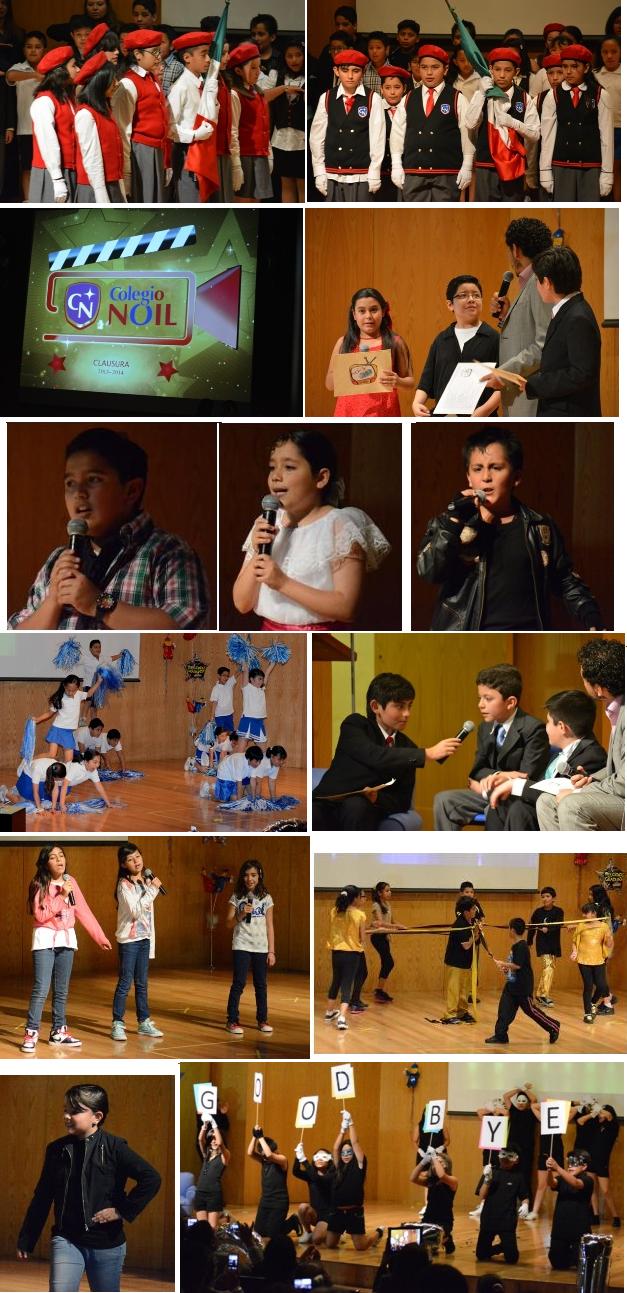
Para cada grado se hizo una entrega de diplomas y reconocimientos especiales para quienes durante el año escolar tuvieron un desempeño sobresaliente en algún área.
Al final, las lágrimas aparecieron inevitablemente cuando cada alumno de sexto recibió en el escenario a sus padres, quienes de diferentes maneras les expresaron sentimientos de amor, orgullo, satisfacción, reconocimiento a su esfuerzo y apoyo incondicional en su proyección futura. La directora, Susana Reyes, despidió a cada uno con unos versos que destacaban sus cualidades y características de su trayectoria en la escuela. Muchos terminaban con: “Te vamos a extrañar”.
Para terminar, hermanados en el estudio y en la amistad, los egresados escucharon las notas de “Las golondrinas” en medio de abrazos y sollozos, para acabar lanzando al aire su birrete en significación de la etapa concluida.

______________________________________
 Submitted by Elaine Gallagher
These games build skills in English, digitalization, and critical thinking! They are fun, apt for various ages or CEFR levels A-2 and above. ENJOY THE CHALLENGE!
#1. Mind Flipper
Mind Flipper is a simple word game. Since this word game is so simple, it may also appeal to children and be a useful tool for parents and educators.
The goal of Mind Flipper is to form words by clicking on the ties, then click the submit button (or press the enter key) when you are ready to submit the word. Letters that are added to the word must be adjacent vertically, horizontally, or diagonally from the last letter that was clicked, and must be clicked in the correct order to spell out a word. For a word to be accepted, it must be a valid word of the English language that is at least three-letters long. Words that are submitted will be listed to the right of the screen and cannot be used again for the duration of the current round. There are five rounds in this word game, each lasting for one and a half minutes (ninety seconds). A new board is presented at the beginning of each round, and the list of words is cleared.
Since Mind Flipper is such a simple game, children may be able to enjoy it. This word game can be a useful tool to help students learn how to spell. Since there is no list of words to be found, kids will be able to test their ability to creatively solve problems and take the initiative. Bigger words score more points, but the small size of the field of letters means that smaller words will be more prevalent, another point that makes this word game ideal for children.
Mind Flipper is a word game that provides great mental exercise for older gamers and children alike. If you enjoy word puzzle games or if you want a game that your child can play that will be entertaining as well as mind-stimulating, then you will flip out for Mind Flipper!
#2. Semantic Wars
Semantic Wars is an excellent tower defense game perfect for adults and kids alike. This is a great game you can play with your kids or that you can play on your own to get a high score and then challenge your kids to beat that high score.
There are three difficulty settings (Easy, Medium and Hard) making it perfect for kids of just about any age. For younger kids, try out the ‘easy’ setting. It is still fairly challenging but not nearly as difficult as ‘medium’ or hard. Regardless of what mode you choose to play, actually winning the game will take careful thinking and a good strategy, helping your kids develop or strengthen those skills and giving you the chance to develop alongside them.
Your goal in Semantic Wars is to destroy your enemy’s castle; something that’s not terribly uncommon in this sort of tower defense game. The biggest difference between this game and most of the other tower defense games online is that you need to use your name to earn money.
This is also what makes this game so educational. You need money to train and deploy soldiers and you earn that money by trying to solve the word puzzle shown at the bottom right of the game screen. Each correct letter you guess will reward you with money. Guess incorrectly, though, and you’ll lose money.
Taking random shots in the dark just isn’t a good idea for that reason. Look at the category and try to determine what the word is from the category. Naturally you’ll have to guess a bit in the beginning, but make smart guesses. Choose commonly used letters. Once you get a letter or two, try to figure out the word. The trickiest part of this, though, is that you have to be relatively quick. The enemy will be attacking and you need the money from those words to deploy soldiers to defend your castle. If your castle is destroyed your game is over.
There are three different types of soldiers you can use in Semantic Wars. Using those soldiers properly is extremely important if you want to make it through the game.
1. You have Melee warriors (the sword icon)
2. Shooters (the arrow icon)
3. Wizards (the fire icon).
Melee warriors are great for short-range combat but they offer no shooting skills. Shooters are excellent for mid-range combat but are of little use for short-range battles. Wizards are great for long and short range combat but they are not armored like melee warriors, which means they take very little damage from enemies before they’re eliminated.
All three soldier-types can be upgraded using the experience you earn each time you use a unit from each different type. This basically means using a wizard will give you experience to upgrade wizards, using melee warriors will give you experience to upgrade melee warriors and using shooters will give you experience to upgrade shooters.
Upgrading your soldier categories will allow you to produce stronger units. As with most tower defense games, upgrades are extremely important when trying to survive the game.
There are several power ups throughout Semantic Wars that can definitely help you do well in the game. These power ups will be dropped from a balloon that appears over the battlefield. Keep an eye out for them and collect them as often as you can.
When collecting power ups, though, don’t go out of your way of the power up that’s dropped doesn’t really offer much in the way of benefit for you. The star icon with the ‘x’ over it offers magic resistance. This gives you a great advantage when tangling with wizards.
The plus icon offers regeneration. The benefits for that one are pretty obvious. The lightning bolt symbol offers extra power. The ‘A’ symbol reveals a letter in the word puzzle. The shield icon gives you a boost in your castle’s defenses. The dollar sign icon gives you an income boost. The wrench icon offers repairs for your castles and the ‘3’ icon reveals the beginning of the word in your word puzzle. All of the power ups offer clear bonuses, but look at what you need in the game and determine if the power up will help you enough to go out of your way to get it.
The only way to do well in Semantic Wars is to focus on the word puzzles just as much as you’re focusing on the battle strategies. You also need to conserve money. If you reach a zero balance in your bank, guessing a wrong letter will cost you castle health and that’s definitely not something you want – especially if you have no warriors on the battlefield. It’s also important to choose your letters wisely.
Try guessing vowels first and then common consonants like ‘R’, ‘S’, ‘T’ and ‘N’. That can help you fill out the puzzle and made it easier to guess the word. It’s also vital that you pay attention to the category. The category helps you narrow down your guesses and will enable you to make more educated guesses.
The greatest thing about Semantic Wars is that it is a great teaching tool for kids. Unlike many of the other tower defense games online there is huge potential for learning with this one. Your kids will need to develop a decent strategy for the battles which strengthens their logic and planning skills, but the addition of the word puzzle is where the real learning comes in.
Although the word puzzles will be difficult in the beginning, your kids will improve their spelling, improve their typing skills and even expand their vocabulary. This is a very education-focused game.
The greatest thing about it, though, is that it doesn’t feel like learning. It’s a lot of fun to play, it’s challenging and it’s engrossing. This teaches your children the most important lesson the game has to offer – that learning can be fun.
#3. The Wizard’s Notebook
The Wizard’s Notebook is an excellent word game that features a unique and challenging premise and excellent graphics. It’s entirely engrossing and incredibly addictive. The only real problem with this one is quite simple – if you’re running a slower computer than can’t handle graphic intensive games you’re going to have an extremely hard time playing this one.
There is a severe lag problem even on faster computers which can definitely pose problems. As long as you are patient, though, and willing to ignore a few glitches and lag problems here and there, this will be an excellent game for you and one that offers wonderful benefits for children.
The basic premise behind The Wizard’s Notebook is very unique in and of itself. Basically, you are trying to get through each level in the game to rescue your princess at the end. Reaching the end, though, will require you to use your brain and carefully analyze the puzzles presented to you and some of them are pretty tricky.
Patience is important with this one and not just because of the lag problems. It is easy to get frustrated with some of the more difficult puzzles. This on its own offers a great lesson for kids. Patience is important with education and with life. The solution to a problem isn’t always obvious. When frustration starts to get the best of your kids, don’t force them to keep playing. Let them take a step back and encourage them to try again once a little time has passed. Sometimes all solving a difficult puzzle takes is a little time away from it.
In order to complete each level in The Wizard’s Notebook you will need to solve the visual puzzle presented to you by figuring out what word you need to use and typing it in. For example, if you get to a puzzle that it seems you’ll need water for, type in the word water.
Sometimes the answer is obvious. Other times it will take a few more guesses. Again, patience is the key. If you can’t seem to come up with the word, try to look at the puzzle a different way. Every puzzle in this game has a solution. Pay close attention to the clues you’re given. If there is a puzzle you just can’t seem to find a solution to, chances are there’s just something you’re missing.
The Wizard’s Notebook also presents a tremendous opportunity for you to bond with your children and have fun with them while you all learn because it isn’t just the kids that can learn something from this game. As adults we too are always learning.
This game focuses on word puzzles, but it does more than strengthen typing skills and other skills you immediately think of when you think of word games. It improves logic and helps improve problem-solving skills. It also provides you with an awesome chance to show your kids that learning can be fun.
This game never feels like a lesson or a teaching tool. It’s a truly fun and challenging game that keeps you playing from start to finish. The greatest benefit the game offers, though, is that it shows your kids how great it can feel to use their brain to win a game which is something many other online games can’t claim.
This is an excellent word game you can feel good about your kids getting hooked on – just don’t be surprised if you get hooked too! This one is a lot of fun.
#4. Savvygram
Savvygram – it has all of the elements that a kids word game should have: it’s simple enough for kids to understand and it’s challenging and fun to keep them interested. The objective of the game is very easy: you are challenged to unscramble the gibberish on the screen… creating a word out of the letters by typing it as quickly as possible. You need to look at the screen and get your hands working and typing without the need for looking at the keyboard.
If you are having a hard time unscrambling what’s on the screen, don’t worry. Savvygram offers a dictionary definition to give you clues or hints. HOWEVER, as the game progresses and you get to the later levels, the words get longer. And most of the time, the dictionary definition or hints are NOT enough. BUT don’t worry. Even if the game gets harder as it progresses, you don’t need to stress out on it. It only lasts for 2 minutes. HOWEVER, believe me, you are going to spend more than 2 minutes on Savvygram whether you are a kid or a grown-up. You will surely challenge yourself to do better the next time around and surpass your previous performance.
You will want to challenge yourself to get more words within the time limit and get a higher score. This is one of the reasons why this game is so addictive and fun!
Savvygram is an excellent word / kids game for anyone – your skill, experience with word games, or age doesn’t really matter. If you want to have fun, then you are bound to have fun with this game! It’s not stuffed with complicated rules like other online word games out there.
Kids can sit back, relax, and focus on enjoying the game rather than reading pages of strategies, techniques, walkthroughs, etc. BUT what about the self-professed experts of word games, won’t they find this game boring for their skill level? My answer: NOT at all! This game is challenging enough even if you are a veteran with word games. You will surely find it interesting enough to keep on trying. This challenge to do better and surpass our personal best records is what appeals to experts of word games.
The rules of Savvygram are very simple… simple enough even for a 9-year old boy or girl to understand within a minute of reading. You have to figure out what the word is and you need to type it as fast as you can. When you key in the RIGHT word, it’s automatically submitted. You don’t even need to press Enter or any other key. On the other hand, if you type in the wrong word (if it’s not submitted, then you need to change your answer), just press backspace and start over.
Just a couple of reminders, you have to keep an eye on the timer which is located on the top portion of the game’s screen. Sometimes, though, looking at the timer pressures me so much that I can’t think quickly. Anyway, if you are having a hard time figuring out the word, just press backspace. Hopefully, the new arrangement of the letters will give you an idea what the word is. If anything else fails, just skip the word rather than let it eat away your precious time.
Remember, you only have 2 minutes for the whole game. To skip, press the semi colon button. Be reminded, though, that skipping would cost you 5 seconds. BUT if you think you would have taken longer in the effort to solve the puzzle, skipping would be worth it.
All in all, Savvygram is, without a doubt, one of the most absorbing and addictive word / kids games you could lay your hands on. The timer makes the game fast paced and exciting. It gives you enough time to tackle different word puzzles BUT it’s not long enough that it seems to take forever.
Along with that, the definitions are a nice twist. It makes the game a little less difficult… BUT it keeps challenging enough so it doesn’t get boring. I can go all day talking about Savvygram, BUT nah, that’s not too fun. Give the game a shot… I’m sure you will have A HECK LOT of fun!
#5. Word Grid
Word Grid is a nifty word game that is fun for gamers of all ages. Word Grid features simple graphics, easy-to-learn controls, and unique gameplay!
Word Grid features three game modes. The common goal of all game modes is to spell out words using adjacent tiles in the grid. For a word to be valid in this word game, it must be an English word no shorter than three-letters long.
If a word is valid, a distinctive sound will play and the word will appear along with its point value at the bottom of the screen. Press enter to submit the word. You may also press backspace to clear individual letters or press escape to deselect all letters if you are unhappy with the word that you are spelling.
The three game modes featured in Word Grid are
1. Timed mode
2. Practice mode
3. Limited mode.
In Timed mode, your objective is to score as many points as possible by forming words before time runs out. Each time a word is spelled, additional time is earned. The longer the word, the more time will be earned.
The second mode in this word game is Practice mode. Practice mode offers unlimited time and is good to play to get used to the game mechanics.
The final game mode, and my personal favorite, is limited mode. In this mode, you are given limited time, a limited amount of tiles that may be used, and a limited number of words that you are allowed to spell. When any of the counters reaches zero, the game will end and your score will be tallied.
Since Word Grid is a nonviolent game that tests vocabulary and problem-solving skills, it may be a great game for kids. The potential complexity of the game (particularly the control of gravity and Specials) may not be fully grasped by younger players, but these aspects are not totally necessary to do well in this word game.
Also, since a respectable score can be attained by spelling out short words (as long as they are three-letters long or longer), elementary school students can still do well in it.
Word Grid is an addicting and challenging word game that provides a unique twist to the genre. Word Grid can be played simply by young children or casual players, while older or more experienced players also love to play it!
#6. Arithmetic Challenge
Arithmetic Challenge is a very simple yet very entertaining math game that helps you strengthen your math skills while also having fun. It’s the perfect math game for kids or adults who are either learning math or trying to improve the math skills they already have.
You need to be quick and accurate if you want to get a good score which makes the game challenging and therefore, even more addictive. It’s actually a pretty simple game at its core. There are no fancy graphics or over the top animations. You have your equations on the left side of the screen are your timer and points at the top right side of the screen. Get the right answer and you’ll get a green check mark. Get the wrong answer and you’ll get a red ‘x’. Your goal is to get as many right answers as you can within the time allowed.
Each correct answer gives you one point. No points are deducted for wrong answers but each wrong answer will, more or less, cost you the point you would’ve gotten for a right answer. Being quick is obvious important as you only have sixty seconds to answer questions, but being careful is also important. Finding the balance between both is the key to doing well in this game.
Arithmetic Challenge is one of the best math games online simply because it allows you to strengthen all of your math operations without allowing you to rely on the operation you’re strongest with.
You start the game by choosing which operation you want to work with; addition, subtraction, multiplication or division. The questions you get during that game will only involve the operation you choose.
For example, if you need help with multiplication, you can choose that operation. You will only get multiplication questions. They start off fairly easy but get much harder as the game progresses. This is better than the ‘all operations’ format with many of the other math games online because you won’t be able to just guess at the multiplication questions that give you a hard time and boost your score with simpler addition and subtraction questions.
This will be especially beneficial for kids who will be able to strengthen all areas of their math skills; playing first with addition and subtraction then moving on to multiplication and division when they learn those operations.
Arithmetic Challenge also gives you the chance to show your kids that learning can be fun. You can play this excellent math game with your kids and challenge them to beat your high score. You can get in that all-important quality time with your child and help them strengthen their math skills while also strengthening your own. You can learn together as a family.
If you start with this game when your child is younger, you give him/her a great foundation for doing well in math class in school. In addition, you can also help them equate learning math with something they enjoy instead of something they’re forced to do. While the game can be difficult, kids will love the challenge of trying to beat their parents at a game.
Alternatively, challenge them to beat their own high score; allowing them to continue improving and showing them how much fun it can be to do better than they thought they could do.
Overall, Arithmetic Challenge is an excellent math game to play on your own but is even better to play with your kids. Getting your children to enjoy learning math is easy with a game like this that is simple yet challenging. Make sure your kids aren’t just focusing on what they know the best though.
If you want to get the most out of the game, play through each other the operations a few times to get your high score in each one and then challenge your kids to beat each of those high scores. This is a game you can feel good about them playing for hours because, whether they even realize it or not, they’ll be learning the entire time.
If your kids are struggling, take the opportunity to help them understand math better. Tell them any tricks and rules you know for doing operations faster and above all else, have fun. This is an excellent math game for anyone looking to improve their own math skills or to teach their kids that learning can in fact be entertaining too.
____________________________________
ANY OTHER GAME SUGGESTIONS?

Álvaro Sancho González en Educación XXI
Para hablar sobre la relación entre el futbol y su contribución en el plano educativo, la emisión de este sábado de Educación XXI que conduce Leonardo Kourchenko tuvo como invitados a Bret Ojeda, coordinador de la Escuela de futbol Pumitas en Interlomas y, a Álvaro Sancho González, director del Campus Experience en México de la fundación del club europeo Real Madrid.
Debido a la transmisión en W-Radio del partido por el tercer lugar de la copa mundial de futbol, el programa duró la mitad de lo habitual, por lo que Leonardo urgió a los invitados a externar sus opiniones sobre los aportes educativos de esta disciplina deportiva
Álvaro comentó que es evidente que el deporte es una herramienta fundamental para la vida y para la educación. El deporte, dijo, son valores, compromiso, esfuerzo, ingredientes que hoy quizá la sociedad olvida un poco. El deporte y el futbol en particular nos ayudan a reforzar desde pequeños este tipo de valores. Las enseñanzas son muchísimas: alegría, frustración, tolerancia, dolor, superación personal.

Bret Ojeda en Educación XXI
Por su parte, Bret destacó la importancia de las escuelas para influir en el carácter y en la formación de los niños. A la pregunta de si eran necesarias, dijo que en efecto antes se podía jugar en cualquier parte, pero no se trata sólo de enseñarles futbol sino a conocer su cuerpo, a tener flexibilidad, motricidad y para ello se requiere de un especialista. La de Pumas es una de las escuelas con más tradición.
A un año de haber iniciado en México la organización con base en los valores que transmite el real Madrid, a Álvaro le sorprendió la pasión con la que se vive el futbol en México; en España existe, pero no en esta dimensión. Aquí ha observado que ayuda a padres y familias a tener una vivencia alrededor del juego y de los niños.
Sobre Campus Experience, Álvaro explicó que surgió como campamento de verano en España en 2009 y llegó a México el año pasado. Para este curso (21 julio al 20 de agosto), habrá siete sedes: tres de ellas en el Distrito Federal y sus alrededores (Pedregal, Santa Fe y Lago de Guadalupe), además de Guadalajara, San Luis Potosí, Querétaro y Valle de Bravo. Uno de los aspectos que se trabaja con los entrenadores venidos desde Madrid es el de la multilateralidad –el uso de ambas piernas– para un mejor conocimiento y aprovechamiento de su cuerpo.
Ambos invitados coincidieron que la intención no es la de formar una cantera profesional; lo que buscamos, dijo Bret, es darle los conocimientos al niño, que conozca su cuerpo y tenga una cultura del deporte. Sin embargo Álvaro comentó que en el curso anterior los entrenadores –que aseguran que en México existe un gran talento–, identificaron a tres chicos con posibilidades.
Leonardo preguntó que hacía falta en México para sobresalir, considerando que tenemos una liga de futbol desde hace 100 años mientras que en Estados Unidos con mucho menos de establecido el deporte ya nos ganan. Álvaro lo atribuyó a la falta de confianza y mentalidad ganadora. El deportista debe creer que es posible y en España ocurrió, con la ayuda de recursos públicos e inversiones en centros de alto rendimiento. Bret opinó que hay talento suficiente pero no el necesario apoyo institucional.
Respondiendo a Leonardo, Bret dijo que el futbol le dio una experiencia de vida inolvidable, valores, amistades para toda la vida, una cultura física y la posibilidad de viajar.
En su turno y para no repetir lo ya dicho, Álvaro mencionó que el deporte en general se asemeja mucho a la vida: asumir compromisos, riesgos, decisiones. Es un ejercicio de juego de vida que va a ser útil en tu profesión, tu familia y en el día a día.

________________________________
Más detalles y contacto con ambas organizaciones se pueden obtener en:
https://www.facebook.com/pages/Pumas-Interlomas/235400739876579
Mail.comunicacion@pumasinterlomas.com.mx
http://campusexperiencemexico.com/
inscripciones@campusexperiencemexico.com

Casi a manera de desafío, Pablo Doberti, en su columna de esta semana nos ofrece una idea singular alrededor de la lectura, construyendo a partir de leer manera colectiva, diversa, incluyente y progresiva, no en el sentido de avanzar páginas sino en el de adelantar en descubrimientos.
Muchos son los hilos que se derivan de este proceso para generar interacciones que conduzcan al aprendizaje en un marco de libertad.
La columna puede leerse en: http://pijamasurf.com/2014/07/el-inversor-festival-de-lectura/

En el marco de la presentación de los proyectos correspondientes al cierre del ciclo escolar en el Colegio Carmel de la Ciudad de México, alumnos de quinto de primaria expusieron a sus padres el resultado de su investigación para crear una pequeña empresa y la puesta en práctica de la misma en una feria empresarial.
En el aula de quinto grado presentaron videos describiendo las bondades de sus productos –incluyendo un anuncio comercial musicalizado–, para luego pasar al patio donde montaron puestos de exhibición y venta, ofrecieron degustación y repartieron trípticos informativos y tarjetas de presentación, todo ello realizado por los alumnos y totalmente en inglés.
Con excepción de una empresa de pulseras y figuras artesanales hechas con ligas de colores, el resto se ubicó en el ramo de alimentos y bebidas incluyendo: paletas de agua y de dulce, comida oriental, donas y muffins, aguas frescas y smooties.
 La maestra Clara Ruth Pérez Rodríguez explicó que fue una propuesta de los alumnos para saber qué era una empresa. Con la experiencia adquirida en proyectos de UNOi investigaron cómo armar una empresa, su objetivo, el mercado al que iba dirigido su producto, diseño de logotipos, aspectos de importación y exportación y más. Un objetivo adicional que se cumplió fue el de ampliar su experiencia al hablar en público y su práctica del inglés.
También en inglés fue la presentación de un grupo de tercero que, con sombreros tejanos, chalecos y camisas a cuadros hablaron del Oeste de los Estados Unidos, su historia y geografía y demostraron su habilidad en el vocabulario del tema.
 Otro grupo de tercero –ellos de bata blanca–, abordaron temas de ciencia y experimentos y demostraron a sus padres: sonidos producidos con ligas; un termómetro casero, balanzas hechas por ellos mismos, plántulas de frijol y sus cuidados y figuras geométricas con volumen para armar.
La muestra abarcó también presentaciones de cuarto grado sobre fauna forestal ecosistemas y maltrato a los animales, y transporte inventos y artistas. Un grupo más de tercero presentó un recorrido por los astros con la guía de superhéroes.
 La maestra Elizabeth Reynoso, quien condujo amablemente a UnoNews por esta visita, expresó su satisfacción por la muestra y por el acompañamiento de UNOi a lo largo de este su primer año en el Colegio, aunque ya había trabajado antes con el sistema. Consideró que el desafío tecnológico seguía vigente al igual que la necesaria preparación constante de directivos y maestros.
___________________________

Foto: © eltoro69/depositphotos.com
Por Dionisia Pappatheodorou
“Los problemas de hoy derivan de las soluciones de ayer.” Peter SengeNada sucede por generación espontánea, todo implica procesos en los que se ven involucrados elementos que se interrelacionan entre si para desarrollar una función y cumplir un propósito. A grandes rasgos, esto se acerca a la definición de sistema, y nuestro mundo está compuesto y organizado en sistemas. Dentro de un sistema, cada elemento o sub sistema existe de manera autónoma, pero su función se ve supeditada a otros elementos que son interdependientes. Juntos, estos elementos conforman un todo, una unidad mayor organizada cuyos resultados superan la suma de sus partes. Esta nueva unidad –o supra sistema– a su vez, forma parte de un mecanismo mayor… y así sucesivamente.
Existen sistemas simples como las células, imbuidos dentro de sistemas superiores que llegan a tener grados altísimos de complejidad: tejidos, individuos… el universo en su totalidad es también un sistema. Una característica fundamental de los sistemas es su capacidad de adaptarse a su entorno, y su grado de complejidad se define con base en la cantidad de variables que intervienen en sus ciclos de funcionamiento. Cualquier cosa que implique cambios puede visualizarse como sistema, y la vida es en principio movimiento, evolución y cambio… operado por sistemas.
Si nosotros mismos nos percibimos como un sistema, resulta posible considerarnos parte de lo que sucede a nuestro alrededor, y podemos entonces distinguir la manera en que influimos y somos influidos por nuestro entorno. Lograr una visión sistémica de la realidad es una habilidad que nos permite tener cierto control sobre estas influencias y sobre lo que nos sucede.
Para subsistir, los sistemas requieren mantenerse en equilibrio, internamente y en relación al medio en el que existen. Romper el equilibrio significa problemas, y la impresionante aceleración con la que el cambio se lleva a cabo en la actualidad complica y pone en riesgo el equilibrio sistémico. Eventualmente, nuestra capacidad de respuesta resulta particularmente lenta e ineficiente para alcanzar el ritmo de cambio actual: la realidad nos rebasa y evidentemente quedamos cada vez mas desfasados.
Esto nos coloca en una posición sumamente desventajosa que requerimos atajar con extrema urgencia ya que irremediablemente, nuestros problemas adquieren la dimensión de nuestras propias incapacidades. Las situaciones se tornan en problemas cuando carecemos de los elementos y recursos necesarios para resolverlas. El mundo ha cambiado, las condiciones y las circunstancias son distintas y lo que antes funcionaba, ya no funciona igual, especialmente en nuestra relación con los pequeños y los jóvenes, quienes han tenido la oportunidad de adaptarse naturalmente a estos cambios.
Esto nos obliga forzosamente a romper algunas reglas… a veces nuestras propias reglas y paradigmas -muy arraigados-, para adaptarnos a las nuevas situaciones, sobre todo en cuestión de formas. La manera de educar y disciplinar a los jóvenes puede ser un buen ejemplo. Aunque los conceptos permanecen a lo largo del tiempo, las situaciones han variado considerablemente, y con ello, nuestro comportamiento y formas de pensar requieren también inaplazablemente de adaptación.
Los modelos de razonamiento ya obsoletos, deben transformarse para dar paso a nuevos esquemas y enfoques, distintos de los tradicionales, a fin de complementarlos. Construir “puentes” que suavicen el cambio y mantengan la armonía entre elementos aparentemente contradictorios, es importante. Nuestros jóvenes requieren desesperadamente de nuestra experiencia y guía, pero no logramos que nos escuchen.
Salvo contadas excepciones, lo que hacemos en este sentido no está funcionando porque insistimos en repetir con exactitud los viejos patrones que conocemos, sin tomar en cuenta los cambios. Permanecemos estáticos aunque requerimos exactamente de lo opuesto: del movimiento y la creatividad que en la actualidad a los jóvenes les sobra. Nos está haciendo falta flexibilidad y apertura para conectarnos con ellos y poder orientarles.
Definitivamente, no se trata de permitirles todo, ni de ser sumisos ante su voluntad. Se trata de establecer límites y lograr un acuerdo para unir modos distintos de comportamiento y al mismo tiempo dejarlos ser. Se trata de compartir y complementarnos; mantener el equilibrio entre dar y recibir. Esta es la mejor estrategia para crecer en todos sentidos, y se simplifica cuando aprendemos a pensar en la totalidad de los sistemas.
__________________________________________________

By Elaine Gallagher
The term «academic pre-school», for the purposes of this article, refers to a school which has organized, academic classes (i.e. reading, writing, worksheets, and homework) for children before they are 5 – 6 years old, before entering first grade of primary school.
In the USA, Canada, and Finland there is only one year of public pre-school, called «Kindergarten», (German term: «children’s garden») for children, before they enter first grade of primary. Finland’s Kindergarten begins for children age 6, not younger. In USA and Canada, Kindergarten can begin as early as age 5 1/2, depending on the state or province.
In Mexico, there are public kindergartens for children ages 3 and up: «Kinder 1, Kinder 2, and Kinder 3», with Kinder 3 having children about 5 years of age.
The USA, Canada, and Finland do not teach writing or reading skills until first grade of primary, in order for children’s gross motor skills to be fully developed before emphasizing fine motor skills. They concentrate on social and physical development, music, art, play, and oral fluency in two or more languages.
Kindergartens in Canada and Finland, and in some USA states (usually those on the border with Mexico) are bilingual, English and Spanish (USA), English and French (Canada), and English and Finnish, plus exposure to Russian or Swedish (Finland).
The «official» philosophy of the Mexican Secretary of Education is the same as in the USA, Canada, and Finland…
not to teach writing and reading until first grade of primary so that students will be able to fully development gross motor skills prior to the development of fine motor skills.
Why? Because many research studies since the 1950’s have been confirming that dyslexia can be exhibited by 15% of children in 2nd-3rd grade of primary if they were rushed into writing by ages 3, 4, 5, prior to full development of their gross motor skills. (by 40 years of observations by Montessori and Piaget; confirmed neurologically in 2010 by Dr.Tomas Ortiz, and others)
Yet, despite much evidence to the contrary, eager parents and zealous schools or teachers in Mexico, and elsewhere, have the idea (NOT the proof) that «their» children are smarter, the school is better, if all the students are reading and writing (both manuscript and cursive!) by 5 years of age, BEFORE entering first grade.
Perpetuating this fallacy are many first grade teachers who expect that children arrive in first grade already reading and writing!
I ask you, parents and educators: WHAT IS THE RUSH?
Really, truly, think about that question: What is the rush? What is the difference between a child who can already write at age 5 and one who begins to write at age 6?
Do you want to risk YOUR child’s future? Could your child be among the 15% genetically predisposed to exhibit dyslexia? Are you willing to take the chance?
Early writing, or even reading, are not necessarily signs of higher intelligence. Much more indicative of intelligence is the vocabulary level and oral fluency of a child or adult. If you are fluent with words, you will easily learn to read and then to write creatively, not simply forming letters.
Once upon a time, many children didn’t attend preschool at all, and those who did spent their mornings cutting, pasting, and playing house or playing with clay or building blocks. These days, preschool is a rite of passage, and “academic” preschools that promise to prepare kids for the cutthroat world of first grade are becoming more and more popular. But are they a good idea?
Not really, say many experts. “Research…shows that academic preschools offer children no long-term advantages academically, but make children more anxious,” says Roberta Golinkoff, author of Einstein Never Used Flash Cards: How Our Children Really Learn and Why They Need to Play More and Memorize Less.
While every preschool is different, there are some traits the best ones share, according to Martha E. Mock, assistant professor at the University of Rochester Warner School of Education. “Young children learn best through meaningful interaction with real materials and caring adults and their peers, not through the drilling of isolated skills,” she says.
Child development experts say that children in academic preschools often learn math and reading at the expense of their social skills. Kids from play-based programs usually catch up academically, while kids from academic backgrounds may never catch up socially. This can be devastating to their self-esteem.
Not surprisingly, supporters of academic preschools heartily disagree. “Children at that early age are like little sponges, and the more information you can expose them to, the better,” says Shirley Mace, administrator at the Stratford School in Los Gatos, California, who points out that the schedule includes time for play. Nonetheless, she adds, the program is “not for an overly active child…It’s best for one who can sit and focus for 20-30 minutes.”
Plenty of parents say their kids are up for that challenge. “He’s very curious, asks a lot of questions, understands things at a deep level – overall he’s cognitively advanced for his age,” says one mother whose son attended an academic preschool.
Contrary to the stereotype of pushy parents, some families send one child to an academic preschool and their siblings to a traditional play-based school, depending on the child’s personality. Others choose three days per week at an academic program and two days per week at a play-based school, hoping to achieve the best of both worlds.
Whether you feel your child or the students in your school will thrive best in an environment with dress-up corners and sand tables, or one with a regular academic curriculum, the good news is, there’s plenty of choice out there. Just make sure that in addition to any worksheets, there’s plenty of time for free time. Because play should be a major component of every child’s day!
An excellent book, called «Play» (2014), shows the importance of free playtime in children’s lives. Children learn through play, so when young children are required to do much academic work, worksheets and homework, we actually reduce their play-time and stifle their long-term mental growth.
What’s my personal opinion, you may be wondering?
Simple: School should be a place to enjoy, to feel good about yourself, to learn, and to acquire positive habits and values!
I was born in 1942, entered Kindergarten in 1948, where all we did was play, color, play, cut & paste, play, sing, pretend, and play. The thing I absolutely hated was «nap time», but I escaped by hiding in the big dollhouse whenever the teacher was looking the other way.
I learned to read and write in first grade. I was almost 7 years old. I loved school! The mental challenges, open questions, the consistency of a schedule, practicing to do things better and neater.
I still love to read and write, and learned those skills in school by teachers who read aloud to us daily, who had daily structured writing time, so we actually learned how to do original writing, not boring patterns or grammar rules to memorize. We learned grammar by using correct grammar, subtly corrected by teacher when we made errors.
There rarely were worksheets to complete, and practically no homework, throughout primary and middle school was practically non-existent. If there was any homework, it was to study for a spelling quiz or to answer the catechism questions for religion class.
This is the same kind of education I saw for my children (now ages 50 and 46), in both private and public schools in USA. But by the next generation, my grandchildren, (now ages 15 to 24) education had taken a dangerous, negative metamorphosis, with emphasis on high stakes, standardized exams, teacher pressure, and memorization of data. Critical thinking was non-existent, not in the teachers and not provided for the children.
Homework had become so excessive (3 – 4 hours in 4th grade) that I actually went to my grandson’s teachers (departmentalized so there were several), to complain that he had come to live with us for a year to learn Spanish, but we had no time to cook together, to go shopping together, or to have fun together, because of all the worthless, tedious homework.
Much to my shock and surprise, the teachers were not apologetic, nor even polite. One teacher said, «Welcome to the real world of education, Doctor Gallagher. We are here to see that your grandson passes the Texas state exams. I don’t have time to enjoy those things with my own personal children, either.»
Then I went to the school principal with my concerns, armed with facts and evidence of one-week’s homework assignments. She did listen, and was extremely surprised at the amount of work kids were expected to do, from Kindergarten upward. Because the school was departmentalized, children had a different teacher for each subject, and changed classes every hour, as if they were in high school…each teacher giving 30-45 minutes of homework daily, and even more on weekends.
I asked the principal: «Where was quality time with family? Where was time just to be a kid, enjoying life?»
The principal acted. She sent a notice to all 55 teachers and all parents, stating that homework could not exceed 1/2 hour a night total, NOT per teacher. Then she re-organized the school, for the next year, to have self-contained classes (one teacher for all subjects) so there could be more correlation among the academic subjects, not isolated by teacher. Yes, it was more difficult for the teachers to teach several subjects, but it was much better for the students’ learning in primary grades.
That 4th grade year, in May, my grandson received an award medallion to wear around his neck for the highest test scores in the Texas State exams.
Ironically, and sadly, when our grandson returned home to Maine for 5th grade, (yes, having learned Spanish living with us), his scores on the Iowa Test of Basic Skills for 5th grade reflected almost the same scores as he had performed on the ITBS in Maine in 3rd grade!
In other words, for all the 4th grade drill and kill exercises, emphasis on daily exam practice for the high stakes Texas State exams, excessive hours of homework, he virtually gained NO academic growth during 4th grade, as measured by the ITBS.
BOTTOM LINE:
Children learn to love school and to learn academically beginning in pre-school, 1st, 2nd, 3rd, 4th grades, through middle school, and beyond… by the use of play, physical activities, music, art, interaction with others in social and academic situations, development of critical thinking skills by use of challenging, thought-provoking questions, by practice (not «drill»), by the integration of academic subjects, flexibility, cooperative learning, projects, creative activities, positive teachers, developing organizational skills and good work habits…….
All these positive school experiences lead to positive attributes of self-esteem, ability to work in cooperative situations, empathy for other, self-motivation and self-initiative.
These are the goals of a really great educational program and what we all should be supporting for all of our children, from pre-school and beyond.
_________________________________________
(Thanks to Hannah Boyd for some of these comments.
Additional researchers also have been quoted in the article.)